Blaise Pascal was born to a small family consisting of his parents and two sisters in Clermont, France, on June 19th, 1623. Early on in his life (around the age of three), Pascal’s mother passed away, and for the remainder of his youth, he and his sisters would be watched over by their father. Due to the constantly changing political and financial climate of France during the early to mid-1600s, the Pascal family moved around the country of France on many occasions, with Blaise Pascal’s father taking many different jobs in the process. A well-respected mathematician, Pascal’s father took the job of teaching his son in the ways of mathematical reason and not in the traditional topics of theology and philosophy that were common in European schools at the time. This education led to Blaise Pascal becoming proficient in mathematical reasoning at a relatively young age.

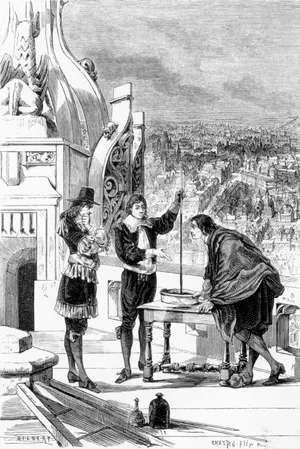
By the age of 17, Blaise Pascal had published an essay on conic sections. In the following years, Pascal went on to develop the first digital calculator to help his father with his work doing tax calculations. Later in life, Pascal would dive into the scientific world and develop many important ideas and machines that are still in use today. One sect of natural science that interested Pascal was the effects of atmospheric pressure. As a result of his studies, Pascal would invent the syringe and the hydraulic press. He would also develop many ideas that would help further studies in hydraulics and the effects of vacuums. At the same time, Pascal was also completing work in the mathematical field with his development of the arithmetic triangle. This triangle, which would become known as “Pascal’s Triangle,” was helpful in modeling probabilities and statistics. In addition to his triangle, Pascal would also complete many works developing the groundwork for game theory and more advanced probability theory.
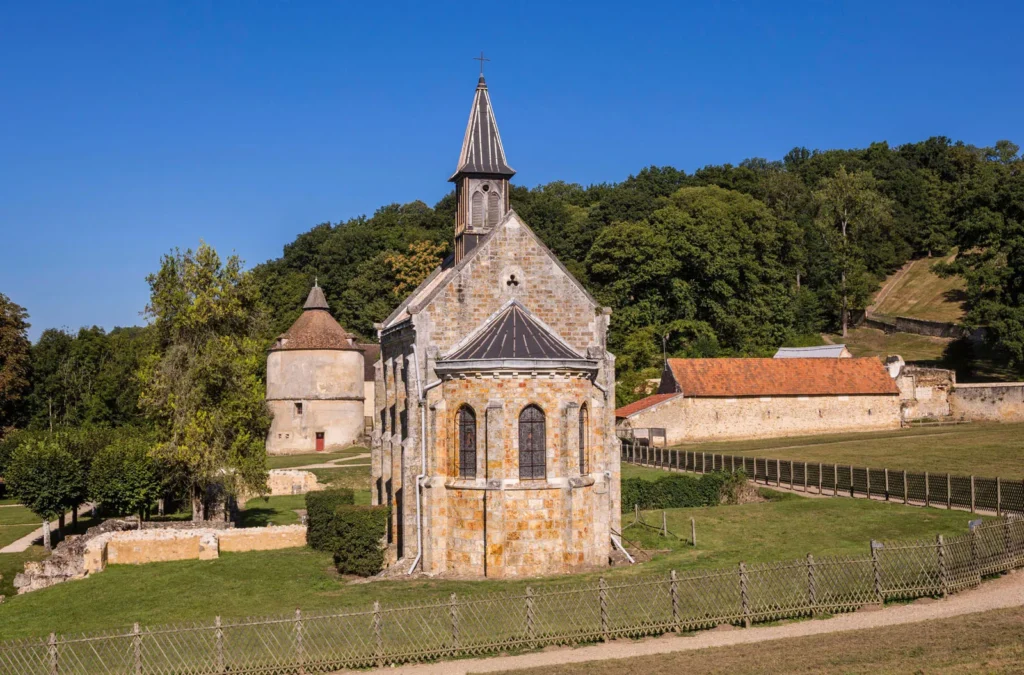
Despite his earlier focus on the topics of mathematics and science, in his later years Pascal would write many important theological works. In his early twenties, Pascal’s father died of a broken hip. During and after their father’s death, both Pascal and his sisters were introduced to and had many interactions with the Deschamps brothers, who were devout followers of a sect of Roman Catholicism known as Jansenism. Jansenism follows the idea of predestination and rejects the idea of free will while supporting the idea that divine grace was the key to salvation. While these interactions did not immediately make Pascal drop math and science out of his studies, they would lay the groundwork for his later theological writings. One November night in 1654, Pascal went through what he would consider a dreamlike conversion and would drop all works in mathematics and science, move to the Port-Royal abbey, and focus on theological texts. The two most important texts of his to come out of his time working with theology were “The Provincial Letters” and “Pensées.” The “Provincial Letters” were written in defense of a Jansenist on trial and dove into the moral code of Jesuits and the importance of divine grace. “Pensées” is an incomplete work that Pascal worked on until his death. It looks at the importance of grace and Jesus Christ as well as the allegorical interpretations of the Bible.
Throughout his life, Pascal was plagued with health issues. He frequently relied on his sisters to care for him during his illness. His health issues caught up to him at a relatively early part of his life, and Blaise Pascal died on August 19th, 1662, in Paris, France, at age 39.
Works Used:
“Blaise Pascal.” Internet Encyclopedia of Philosophy, iep.utm.edu/pascal-b/#H3. Accessed 1 Oct. 2025.
Clarke, Desmond, and William Wood. “Blaise Pascal.” Stanford Encyclopedia of Philosophy, Stanford University, 22 June 2015, plato.stanford.edu/entries/pascal/#LifWor.
Orcibal, Jean, and Lucien Jerphagnon. “Les Provinciales of Blaise Pascal.” Encyclopædia Britannica, Encyclopædia Britannica, inc., www.britannica.com/biography/Blaise-Pascal/Les-Provinciales#ref15003. Accessed 1 Oct. 2025.