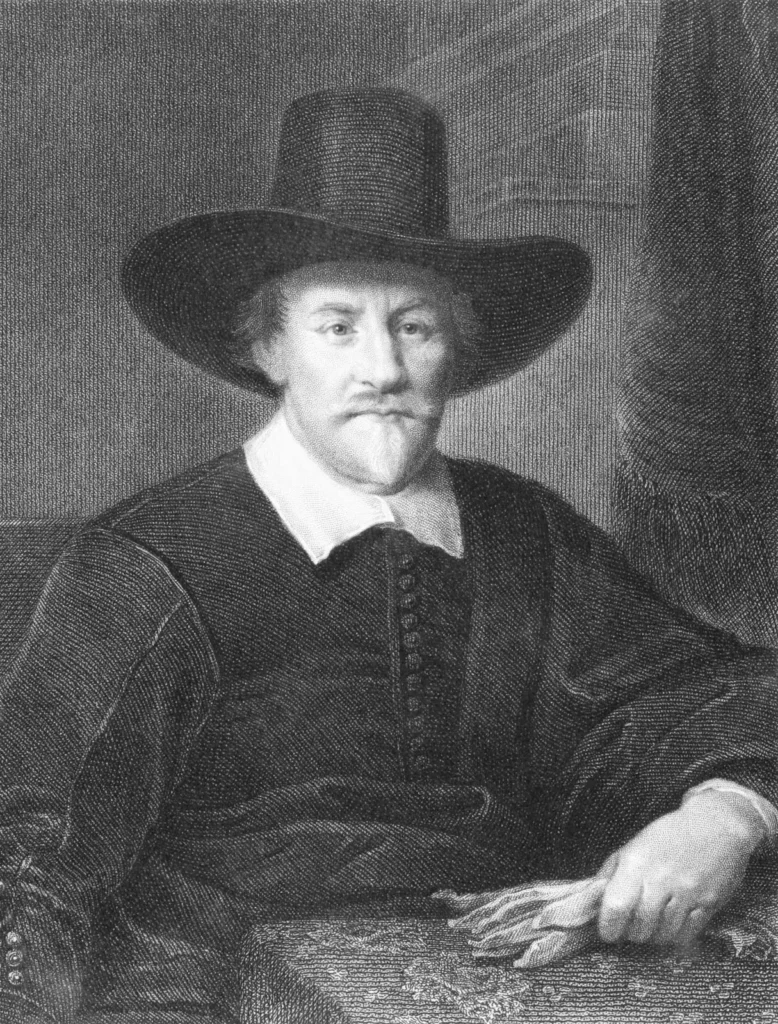

As the “father of international law”, Hugo Grotius’ political musings paved the way for some of the most notable political philosophers of the modern era–including John Locke. Grotius’ conception of Natural Law in The Rights of War and Peace and his sentiments about the obligations of men to one another are similarly found in Locke’s Two Treatises of Government. The influence of Grotius’ conceptions of natural order, the rights of man, and wartime rights is clear in the Two Treatises, providing a powerful point of similarity between two highly regarded political works. Both works feature a strong discussion of natural rights, and its significance in building human societies. Though their philosophies are not necessarily identical, they inform our understanding of each work by expanding on their shared concepts.
One of the prominent similarities between Locke’s and Grotius’ philosophy was their conceptions of how men ought to act towards one another in a society, and how rights factor into that. Grotius takes this one step further, by extending it to nations, but the underlying principles are still the same. At the outset of Chapter VIII of Two Treatises, Locke claims “Men being, as has been said, by nature all free, equal, and independent, no one can be put out of this estate and subjected to the political power of another without his own consent, which is done by agreeing with other men, to join and unite into a community for their comfortable, safe, and peaceable living, one amongst another, in a secure enjoyment of their properties, and a greater security against any that are not of it.”1 This shares many similarities with Grotius’ Right of Nations, in which he claims that the same rules that apply to men living in societies with each other also apply to nations.2 In his eyes, nations have a right and an obligation to protect their citizens’ rights and property, and men have an obligation to ensure their own security in body and in property. Similarly, Locke claims in Two Treatises that this natural state of being free also requires that all power and jurisdiction is reciprocally shared amongst men.3 Grotius, likewise, argues that under international law, nations share power and jurisdiction equally. They each demonstrate distinct, but heavily intertwined conceptions of natural rights and its impact on men, societies, and even entire nations.
A second similarity between Grotius and Locke’s political philosophies is their ideas of war. Their definitions of war, or the state of war, as Locke refers to it, are nearly identical. Grotius conceives of war as being “the state or situation of those who dispute by force of arms”4, while Locke conceives of war as “But force, or a declared design of force upon the person of another, where there is no common superior on earth to appeal to for relief, is the state of war.”5 Inherent in Locke’s definition of war is his faith in the equality of all men and in their mutual consent to coexist with one another, which is similar to Grotius’ faith in the equality of all nations. However, Locke’s examples of when war may be undertaken go farther than Grotius–he argues that a thief may be killed when he tries to rob someone of his property.6 Grotius, meanwhile, maintains that war must be done without committing injustices, and he may disagree with Locke’s interpretation of what would be a just response. Though their conceptions of war are similar, their definitions of the right of war are strikingly different, and emblematic of some of the underlying contrasts between their philosophies.
In their discussion of war, both Locke and Grotius argue for a right of war. Locke’s earlier example of killing a thief who attempts to steal from someone is almost precisely how he defines the right of war: “…it is the want of such an appeal [to a higher power] gives a man the right of war even against an aggressor, though he be in society and a fellow-subject.”7 Grotius’ conception is more justice-oriented than Locke’s, and he defines the right of war as “ that which may be done without Injustice with Regard to an Enemy. Now that is unjust which is repugnant to the Nature of a Society of reasonable Creatures.”8 Grotius appears to show mercy in this definition, and an appreciation for the equality of all men in a society despite being in a state of war. This contrasts with Locke’s definition of the right of war, in which it seems Locke has suspended his earlier belief in the equal rights of all men. In singling out that a man may act against an aggressor even if he is in a mutually protective society with him, Locke extends the right of war somewhat past his initial definition of war. Ultimately, Grotius and Locke agree on many aspects of civil society and human rights, but one primary difference lies in their conception of the right of war and what it entails for each man.
Two of the most notable political philosophers of modern philosophy, Hugo Grotius and John Locke, share many similarities in their beliefs and their writings. Grotius’ magnum opus The Rights of War and Peace laid a foundation for much of modern international law, and subsequently, human and national rights. Locke, meanwhile, wrote the powerful Two Treatises of Government that shared many of Grotius’ themes and provided more fundamental ideas about human rights and civil rights. The most common theme amongst these works is each philosopher’s faith in how a society should operate and what rights men have under a society. Both men questioned what obligations men have to one another when they consent to a society, and what happens when there is war over the deprivation of these shared rights. Their differences, however, become clear in their distinct definitions of the right of war and what that right entails for all citizens of a society. Without the foundation that Grotius established, Locke’s Two Treatises would not have had the impact they hold today.
- Locke, John. 1823. The Works of John Locke : A New Edition, Corrected, in Ten Volumes. Two Treatises of Government. London: Printed for Thomas Tegg. p.146 ↩︎
- Grotius, Hugo. De iure belli ac pacis libri tres [The Rights of War and Peace, Book I]. Translated by Richard Tuck. Indianapolis, IN: Liberty Fund, 2005. p.57 ↩︎
- Locke, John. 1823. The Works of John Locke : A New Edition, Corrected, in Ten Volumes. Two Treatises of Government. London: Printed for Thomas Tegg. p.106 ↩︎
- Grotius, Hugo. De iure belli ac pacis libri tres [The Rights of War and Peace, Book I]. Translated by Richard Tuck. Indianapolis, IN: Liberty Fund, 2005. p.51 ↩︎
- Locke, John. 1823. The Works of John Locke : A New Edition, Corrected, in Ten Volumes. Two Treatises of Government. London: Printed for Thomas Tegg. p.113 ↩︎
- Ibid. ↩︎
- Ibid. ↩︎
- Grotius, Hugo. De iure belli ac pacis libri tres [The Rights of War and Peace, Book I]. Translated by Richard Tuck. Indianapolis, IN: Liberty Fund, 2005. PP.52 ↩︎